
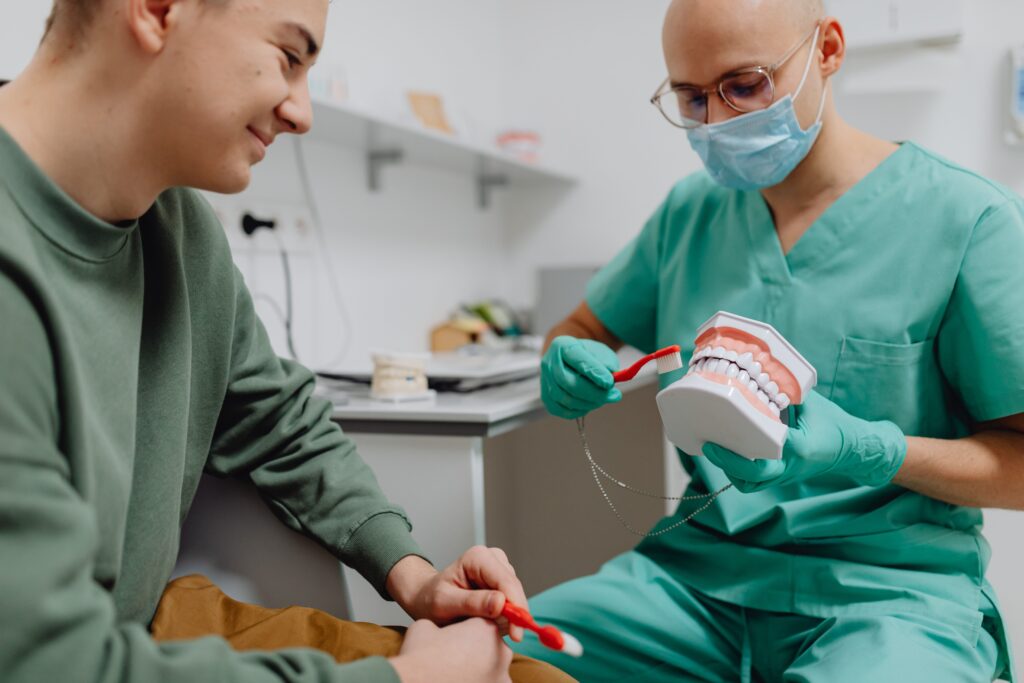
Going to the Dentist: A Toolkit to Support Dental Visits and Dental Practitioners
Oral health is an important part of overall health but can be a challenge for some neurodivergent people. Sensory experiences, anxiety, or communication challenges can be barriers to receiving proper dental care.
Authors: Anne Beattie (Occupational Therapist, Centre for Autism Services Alberta), Ivy Bang (Occupational Therapist, Centre for Autism Services Alberta), Minn N. Yoon (Associate Professor, Mike Petryk School of Dentistry, Faculty of Medicine & Dentistry, University of Alberta)
This toolkit was co-developed by a researcher in the school of dentistry and people in the autism community to help you prepare for a successful dental visit.
Table of Contents
- Background
- Objectives
- Oral Health and Autism
- Finding a Neurodiversity Affirming Dentist
- Advocating with Dental Providers
- Strategies for Dental Practitioners
- Provincial Funding Options
- Additional Resources
- References
- Appendices
1. Background:
Oral health is pivotal to overall health and well-being. Maintaining a healthy mouth is essential to fundamental aspects of life including: eating, clear communication, general comfort, and overall quality of life. On the other hand, poor oral health can lead to negative consequences including pain, persistent infections, difficulties in eating, trouble sleeping, or impact a person’s ability to learn and maintain focus. Untreated oral health issues may present as frustration, agitation, and could potentially lead to dental trauma and anxiety. This relationship between oral health and overall well-being highlights the critical need to prioritize oral health.
Testimonials
My best part of going to the dentist is getting my teeth cleaned. They use a mirror to look at my teeth. I was scared as a kid but I learned to get over it and I like the dentist now. I learned to wait patiently. The dentist helped me feel more comfortable. My adult dentist is great. I wear my night guard every night to make my teeth straighter. I learned from my family about being healthy and I like all the flavours (of fluoride).
– David K., Autistic Adult
In the beginning, E was very nervous about doing anything new. She had never been to the dentist before. We were also really nervous about taking her. We took her when she was six. We worked with our occupational therapist at the Centre for Autism Services Alberta to find a dentist, prepare her for the appointment, and go with us to the appointment.
We had to find a dentist that was willing to be patient, kind, and move slowly with us before and during the appointments. The dentist also had to be okay with us coming to the office just to visit and explore. Once we found him, we worked to prepare E for the dentist. She had a social story that explained what would happen and why it was important. We also went to the dentist office to explore. E was able to bring her occupational therapist with her. She met the staff, saw the building, and we were able to share our strategies with the dental staff.
E did best with a procedure room that was just for her (closed door). They made it quiet and dimmed the lights. The dentist let her touch everything. He explained and modeled each step. Then, before putting the tool in her mouth, he let her touch it. This meant that she slowly had an exam. The dentist was amazing with communicating with us as parents.
E did need to have a tooth removed and cavities filled so she was sedated for the surgery. As she was already sedated, the dentist was willing to do a full cleaning at the same time.
We are so happy with our experience with the dentist. We were so worried but it went better than expected with all the practice and the wonderful dentist.
-Tamara and Jordan F., Parents of E
2. Objectives:
This toolkit was developed with the following objectives:
- Describe the importance of oral healthcare and autism
- Share tools to help Autistic individuals find neurodiversity affirming dental practitioners
- Support the advocacy of inclusive oral healthcare practices
- Provide resources to help dental practitioners better support Autistic individuals
3. Oral Health and Autism:
While autism itself is not a predisposing factor for poor oral health1, Autistic children tend to have an increase in periodontal disease (gum disease), cavities, and poor plaque control2. This can be for a variety of reasons, including:
- Accessing an oral care professional can be a challenge for Autistic children, youth, and adults3
- Establishing proper oral hygiene routines can be impacted by sensory sensitivities or motor skill challenges4
- Dietary habits that include a preference for carbohydrates and refined sugar5
- Some dental providers report they do not have the resources or knowledge to support Autistic individuals effectively6
If you ask me how I’m doing during the appointment, I will give you the socially correct answer “I’m fine” because I will just want to get the appointment over with and I am in pain, but don’t want you to be distraught that I’m in pain. Then once the appointment is over I will have to process what happened for an extended period of time. How long is this extended period of time? It can be weeks and months where that single appointment becomes a replayed traumatic experience over and over.
-Autistic Person
Data shows significant disparities in care and outcomes: 31% of children do not brush their teeth daily7, and 15–36% never visit the dentist8. Disease prevalence is high, with 61% reporting dental caries and 69% reporting periodontal disease2. Common oral habits like Pica, lip biting, tongue thrusting, and mouth breathing can increase the likelihood of misaligned bites which may require braces or orthodontics to treat9,10. Furthermore, medications often prescribed to autistic individuals, including antipsychotics and antidepressants, can cause side effects like Xerostomia (dry mouth) and Gingival enlargement (swollen gums).
This emphasizes the need for increased awareness and education among parents, caregivers, as well as dental professionals. Early intervention and preventative care is necessary to establish good oral hygiene habits. However, accessing a dentist can be a challenge for Autistic children, youth, and adults3. Some dental providers report they do not have sufficient knowledge and skills to support Autistic individuals effectively6, but increased exposure in education and training can increase their willingness to treat11. Furthermore, a siloed approach to oral health care for Autistic individuals is simply insufficient; interprofessional collaboration, recognizing that oral health is intrinsically linked to sensory, behavioral, and developmental factors, is essential for achieving holistic and, ultimately, successful care.
4. Finding a Neurodiversity Affirming Dentist:
There are several factors to consider when choosing a dentist. For many individuals, these factors include:
- Location of the dental office
- Dentist qualifications
- Dental office environment (e.g., windows, comfort of reception and waiting room areas)
- Equipment used (e.g., technology, modern tools)
- Types of services provided (e.g., availability of emergency care, possibility of sedation dentistry for cleanings if required)
To determine if a dental office or dentist provides neurodiversity affirming care, you may also want to consider the following:
- The dentist’s experience supporting neurodivergent individuals
- Specialty in anxiety, pediatrics or adult populations (based on age of individual seeking dental services), and/or additional health concerns
- Environmental accommodations that are described on the dentist website or shared by the receptionist
- Feedback from others shared on online forums or health professional rating sites
- Available methods for booking appointments and other communications (e.g., online appointment requests, email or text message communication, etc.)
- Information that may be available from a provincial dental association
The following questions may be helpful in determining if a dental office will be a good fit for you. You can try to answer these questions yourself or ask the dental office directly:
|
Domain |
Questions to Ask |
|---|---|
|
Location |
|
|
Appointment Options |
|
|
Dentist Experience |
|
|
Accommodations |
|
|
Payment |
|
5. Advocating with Dental Providers
My husband had not been to the dentist in over 10 years because he found the sensory experience of his teeth being cleaned to be unbearable. He finally accepted that he needed to go and called a dentist to see if they offered sedation dentistry. The woman who answered the phone teased him about ‘being scared of the dentist’ and he became very upset. He informed her that he isn’t scared of the dentist, he cannot handle the sound of the cleaning instruments inside his head. He hung up on her and refused to talk about going to the dentist again until 2 years later when he was having bad tooth pain. That time, I called around until we found a place that offered sedation dentistry without judgement.
-R, wife of Autistic man
While the onus should not be on neurodivergent individuals to create inclusive spaces in healthcare, there are strategies that can be used to support a more comfortable dental visit.
Here are some things you can do to prepare for the visit:
- Review location pictures, including the waiting room and procedure rooms
- Send the dentist information about you ahead of time (e.g., “All About Me”; Appendix 1)
- Review online videos of common dental procedures
- Watching videos of different dental procedures can be uncomfortable. Make sure to pick videos that align with your preferences (e.g., animated versus actual video)
- Practice similar activities at home to find out if there are things you may like or not like, and to get some experience:
- Try wearing a paper bib
- Try an electric toothbrush to feel vibrations in your mouth
- Try tapping plastic or metal utensils lightly against your teeth
- Try warm vs. cold water in your mouth
- Ask someone you trust to look in your mouth while you are lying down
- Try counting your teeth
- Hold your mouth open for 20-30 seconds
- Share any likes or dislikes with the dentist
- Prepare any tools that might make the visit more comfortable for you (e.g., specialized lenses, headphones or other auditory devices [note: some headphones may amplify the sound or vibrations during certain dental procedures], comfort items)
- Plan for how you could ask for breaks (e.g., with an action, picture, word) and practice.
- Read a social story and consider bringing it with you to the appointment (For example, see Appendix 2: Going to the Dentist Social Story)
- Develop a plan of what to do after the dental appointment (e.g., a fun activity)
- Find a support person to attend your appointment with you
During the visit:
- Remember: sensory differences are real and valid and deserve to be accommodated12
- Bring sensory or comfort tools that were helpful during practice
- Bring a communication device to support your advocacy, if needed (For examples, see Figure 1: Visual Choice Board for Dental Visits.)
- Take breaks whenever you need them
- Try calming strategies provided by AIDE Canada12 in the Preparing for a healthcare visit toolkit.

After the visit:
- Is there a follow-up needed? How do you want the dentist to provide you with this information (e.g., written, verbal)?
- Ask for a receipt or invoice if you would like a record for yourself or for a funder
- Debrief with a trusted person on what went well and what did not go well
- If comfortable, share your feedback with the dentist to support their learning for the neurodivergent community
- Enjoy any activities that you planned for after your appointment (e.g., fun activity)
6. Strategies for Dental Practitioners
- Take professional development on dental conditions that commonly co-occur for Autistic people
- Familiarize yourself with inclusive language resources:
- Autism Canada’s Words Matter guide
- Learn more about Self-Injurious Behaviours and how they may indicate an underlying dental issue:
- Stay up to date on peer-reviewed studies and textbook chapters on the use of sedation dentistry for Autistic people, including:
- General Anesthesia and Dental Sedation in Patients with Special Needs: Why, When, and How. A Clinical Guide for Dental Practitioners
- Conscious Sedation in Dentistry for the Management of Pediatric Patients with Autism: A Narrative Review of the Literature
- Special Considerations During Sedation of the Child with Autism Spectrum Disorder
- Provide accommodations. As each patient’s needs will vary and asking for accommodations can be difficult for some, make sure to offer options proactively and without assuming one strategy will work for everyone
- Suggest tools that may be helpful to families looking to support the development of better brushing techniques. For instance, there are some electronic toothbrushes that connect to a phone on an app that allow children to see how well they are brushing certain parts of their mouth. While they can be costly, ‘gamifying’ dental hygiene can lead to better oral health in the long run.
Accommodations examples:
- Environment- dental offices can be overwhelming. Below are some options that may support Autistic patients:
- Offering tours of the office and procedure areas
- Offering flexible appointment times based on patient preference (e.g., quieter times of day)
- Offering procedure rooms that allow for privacy and reduced sensory stimuli
- Allowing patients to remain in their vehicles until their appointment begins
- Providing light and noise reducing tools (e.g., sunglasses)
- Procedures
- Offer multiple visits to help develop trust and comfort
- Provide choices in each procedure (e.g., polishing with water, air, or prophy cups)
- Provide opportunities for breaks
- Provide options to sit versus lay down
- Communication preferences. Patients may communicate through spoken language, gestures, Augmentative and Alternative Communication devices, and more.
- When supporting patients to understand procedures and recommendations, utilize a variety of communication methods (e.g., videos, simplified visuals and diagrams, written resources, spoken language)
- If someone comes to their appointment with a support person, ensure you are speaking to the patient, not the support person.
- Monitor throughout the visit for ongoing consent/assent.
- Share videos before the appointment and during to help them understand the procedures
7. Provincial Funding Options:
These links were valid at the time of toolkit publication and may or may not work in future years.
- For more information, the Canadian Dental Care Plan Factsheet.
Free or reduced fee coverage through university dental programs and occasionally urgent procedures through healthcare/hospitals
|
Province/Territory |
Funding |
|---|---|
|
Alberta |
|
|
British Columbia |
|
|
Manitoba |
|
|
New Brunswick |
|
|
Newfoundland and Labrador |
|
|
Northwest Territories |
|
|
Nunavut |
|
|
Nova Scotia |
|
|
Ontario |
|
|
Prince Edward Island |
|
|
Quebec |
|
|
Saskatchewan |
|
|
Yukon |
8. Additional Resources:
Resources from AIDE Canada:
- Supporting Dental Visits and Oral Hygiene Workshop by the Centre for Autism Services Alberta
- Supporting Self-Care and Personal Hygiene Skills in Children Toolkit
- Better Care for your Autistic Patients – Advice from Service Providers toolkit
- Better Doctors Visits: Advice from Autistic Adults
- Preparing for a healthcare visit workbook
Additional resource that you may want to consider:
Please note this resource was not created by CFASA or AIDE Canada and the language used may not align with neurodiversity affirming practice.
9. References:
1. Lam, P. P. Y., Du, R., Peng, S., McGrath, C. P. J., & Yiu, C. K. Y. (2020). Oral health status of children and adolescents with autism spectrum disorder: A systematic review of case-control studies and meta-analysis. Autism, 24(5), 1047–1066. https://doi.org/10.1177/1362361319877337
2. da Silva, S. N., Gimenez, T., Souza, R. C., Mello-Moura, A. C. V., Raggio, D. P., Morimoto, S., Lara, J. S., Soares, G. C., & Tedesco, T. K. (2017). Oral health status of children and young adults with autism spectrum disorders: Systematic review and meta-analysis. International Journal of Paediatric Dentistry, 27(5), 388–398. https://doi.org/10.1111/ipd.12274
3. Bernath, B., & Kanji, Z. (2021). Exploring barriers to oral health care experienced by individuals living with autism spectrum disorder. Canadian Journal of Dental Hygiene, 55(3), 160–166. https://doi.org/10.29173/cjdh87837
4. Chandrashekhar S, Bommangoudar JS. Management of autistic patients in dental office: a clinical update. Int J Clin Pediatr Dent. 2018;11(3):219–27. doi: 10.5005/jpjournals-10005-1515
5. Raspini B, Prosperi M, Guiducci L, Santocchi E, Tancredi R, Calderoni S, et al. Dietary patterns and weight status in Italian preschoolers with autism spectrum disorder and typically developing children. Nutrients. (2021) 13(11):4039. doi: 10.3390/nu13114039
6. Dao, L. P., Zwetchkenbaum, S., & Inglehart, M. R. (2005). General dentists and special needs patients: Does dental education matter? Journal of Dental Education, 69(10), 1107–1115. https://doi.org/10.1002/j.0022-0337.2005.69.10.tb04011.x
7. Hage, S. R. V., Lopes-Herrera, S. A., Santos, T. F., DefenseNetvral, D. A., Martins, A., Sawasaki, L. Y., & Fernandes, F. D. M. (2020). Oral hygiene and habits of children with autism spectrum disorders and their families. Journal of Clinical and Experimental Dentistry, 12(8), e719–e724. https://doi.org/10.4317/jced.56440
8. Pimentel Júnior, N. S., de Barros, S. G., de Jesus Filho, E., Vianna, M. I. P., Santos, C. M. L., & Cangussu, M. C. T. (2024). Oral health-care practices and dental assistance management strategies for people with autism spectrum disorder: An integrative literature review. Autism, 28(3), 529-539. DOI: 10.1177/13623613231193529
9. Fontaine-Sylvestre, C., Roy, A., Rizkallah, J., Dabbagh, B., & Dos Santos, B. F. (2017). Prevalence of malocclusion in Canadian children with autism spectrum disorder. American Journal of Orthodontics and Dentofacial Orthopedics, 152(1), 38-41. DOI: 10.1016/j.ajodo.2017.02.014
10. Orellana, L. M., Cantero-Fuentealba, C., Schmidlin-Espinoza, L., & Luengo, L. (2019). Oral health, hygiene practices and oral habits of people with autism spectrum disorder. Revista Cubana de Estomatología, 56(3), 1-13. Link
11. Casamassimo, P. S., Seale, N. S., & Ruehs, K. (2004). General dentists’ perceptions of educational and treatment issues affecting access to care for children with special health care needs. Journal of Dental Education, 68(1), 23–28. https://doi.org/10.1002/j.0022-0337.2004.68.1.tb03730.x
12. AIDE Canada. (n.d.). Preparing for a healthcare visit. AIDE Canada.
10. Appendices
- Appendix 1: “All About Me” (Fillable form)
- Appendix 2: Going to the Dentist Social Story
- Appendix 3: Visual Choice Board for Dental Visits